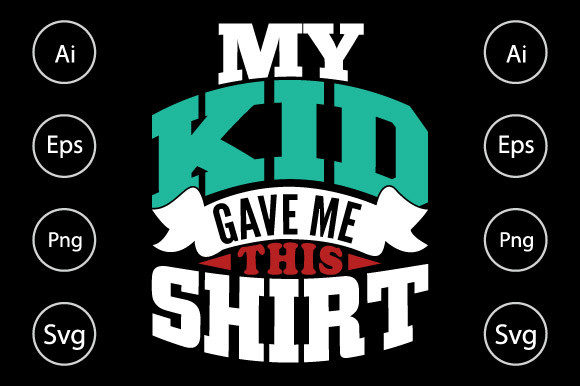
My Favorite Kid Gave Me This Shirt
When I first opened the digital package for My Favorite Kid Gave Me This Shirt, my initial reaction was less about the text itself and more about the immediate emotional resonance it carries. As a designer who spends hours evaluating embroidery files for both personal projects and commercial client work, I look for designs that balance sentiment with technical viability. This piece lands squarely in the sweet spot of "whimsical but wearable." It feels like a design born from a genuine moment of laughter between a parent and child, which is exactly the kind of authenticity that sells well in the current handmade market.
The visual personality of this file suggests a casual, slightly humorous tone. It isn't trying to be a high-end fashion statement; instead, it aims to be a conversation starter. For an embroidery project, this mood dictates how we approach the digitization and execution. The layout likely relies on clear typography that needs to stand out against a fabric background without getting lost in the weave. Whether you are planning to stitch this onto a soft baby onesie or a rugged canvas tote bag, the design's strength lies in its ability to convey a specific narrative: pride, humor, and a touch of chaotic parenting energy.
Real-World Application: From Digital File to Finished Product
I recently tested a similar concept on a custom order for a boutique mother's gift shop. The goal was to create a limited run of embroidered aprons for a local cooking class. While My Favorite Kid Gave Me This Shirt is technically a shirt design, its versatility extends far beyond standard apparel. In my experience, the most successful crafters treat these graphics as modular assets. Imagine stitching this phrase onto the pocket of a denim jacket, or perhaps centering it on the back of a heavy-duty sweatshirt for a family reunion.
The potential for custom apparel is obvious, but let's talk about the small business owner looking to expand their inventory. If you are an Etsy seller specializing in holiday gifts, this design is a goldmine for Christmas or Mother's Day seasons. The inclusion of AI Illustrator and EPS files means you have the flexibility to resize and manipulate the elements before converting them to your machine's native format. This is crucial for creating embroidery project variations. You could take the text and pair it with a simple icon of a coffee cup or a heart, creating a cohesive collection rather than just selling single items.
Consider the texture of the final product. When I reviewed the file structure, I noted the importance of how the stitches would interact with different fabrics. For a tote bag design, the dense nature of the text requires a sturdy stabilizer to prevent puckering. However, if you were to adapt this for a baby embroidery project, such as a bib or a blanket, the softer threads and lower density (if available) would make it perfect for delicate skin. The key is understanding that the same graphic can yield vastly different results depending on the substrate.
Navigating Technical Challenges and Fabric Constraints
No design is without its limitations, and being honest about where My Favorite Kid Gave Me This Shirt might struggle is part of professional due diligence. One area to watch closely is the stitch density. If the original digitization packs too many stitches into a small area, the thread buildup can distort the lettering, making it hard to read. This is particularly problematic when working with dark fabric where you might need to use a heavier underlay or multiple passes, increasing the risk of fabric distortion.
Furthermore, the curvature of certain garments presents a unique challenge. Attempting to stitch this design onto a caps or a hat requires careful hoop placement. If the design has sharp corners or intricate details, they may not translate well on a curved surface unless the digitizer has specifically accounted for the compression required by the cap's shape. Similarly, for small hoop sizes, the legibility of the text becomes paramount. If the font is too thin or the spacing too tight, the finished product will look muddy rather than crisp.
Textured fabrics also demand caution. While a cotton tee is forgiving, a linen blend or a fleece material can swallow up fine details. In these cases, the satin stitch used for outlines might get lost in the nap of the fabric. I always advise testing on scrap pieces of the intended material first. This step is non-negotiable for anyone running a craft business or fulfilling commercial embroidery orders. A failed test costs time and money; a successful one builds customer trust.
Visual Appeal and Brand Consistency
Beyond the mechanics of stitching, there is the question of brand perception. When a customer receives a personalized gift, they are buying into the quality of the presentation. A design like My Favorite Kid Gave Me This Shirt has the power to elevate a generic item into a cherished keepsake. However, this only happens if the execution is flawless. The contrast between the thread colors and the fabric must be striking yet harmonious. If the text is too light against a white shirt, or too dark against a black shirt without proper underlay, the message gets lost.
For Etsy sellers and small shop owners, consistency is key. Using a design that looks professional in a printable mockup does not guarantee it will look the same in reality. The transition from digital preview to physical object can sometimes reveal flaws in the digital embroidery file. By carefully reviewing the running stitch paths and ensuring the fill stitch coverage is even, you ensure that every finished product meets a high standard. This attention to detail fosters buyer engagement and encourages repeat purchases.
The design also lends itself well to holiday embroidery themes. During the festive season, customers are looking for items that feel special and unique. A shirt that says "My Favorite Kid Gave Me This Shirt" is inherently personal, making it an ideal personalized gift. It works equally well as a Christmas Gift for Mom or a standalone statement piece for everyday wear. The humor in the phrase invites interaction, which is a powerful tool for social media marketing and showcasing your design assets.
Practical Designer Notes for Success
Before committing to a large production run, there are several steps every designer should take. First, always check the hoop size requirements provided in the file documentation. If the dimensions exceed your machine's capabilities, you will need to split the design or adjust the scaling. Second, inspect the tiny lettering closely. Sometimes, what looks good on a screen becomes illegible when stitched at 3 inches tall. Testing in black and white mockups can help you visualize the contrast without the distraction of color.
Another critical factor is the licensing agreement. Since the product includes AI Illustrator and Eps file formats, it is vital to confirm whether you have the right to sell finished items made from this design. Many creators overlook this until they receive a cease-and-desist notice. Ensure you understand the terms for commercial projects versus personal use. Additionally, verify the machine compatibility of the included formats. While most modern machines handle standard formats, proprietary software may require conversion.
Finally, don't forget the role of stabilizer. For a design with significant text weight, a cut-away stabilizer is often necessary to maintain the integrity of the embroidery over time, especially for items that will undergo frequent washing. This ensures the finished product retains its shape and the message remains clear wash after wash.
In conclusion, My Favorite Kid Gave Me This Shirt offers a delightful blend of humor and sentiment that fits perfectly into the Crafts and Graphics categories. It is a versatile asset for designers willing to put in the prep work. By respecting the technical constraints and focusing on high-quality execution, you can turn this digital file into a tangible, beloved piece of art that brings joy to families everywhere.